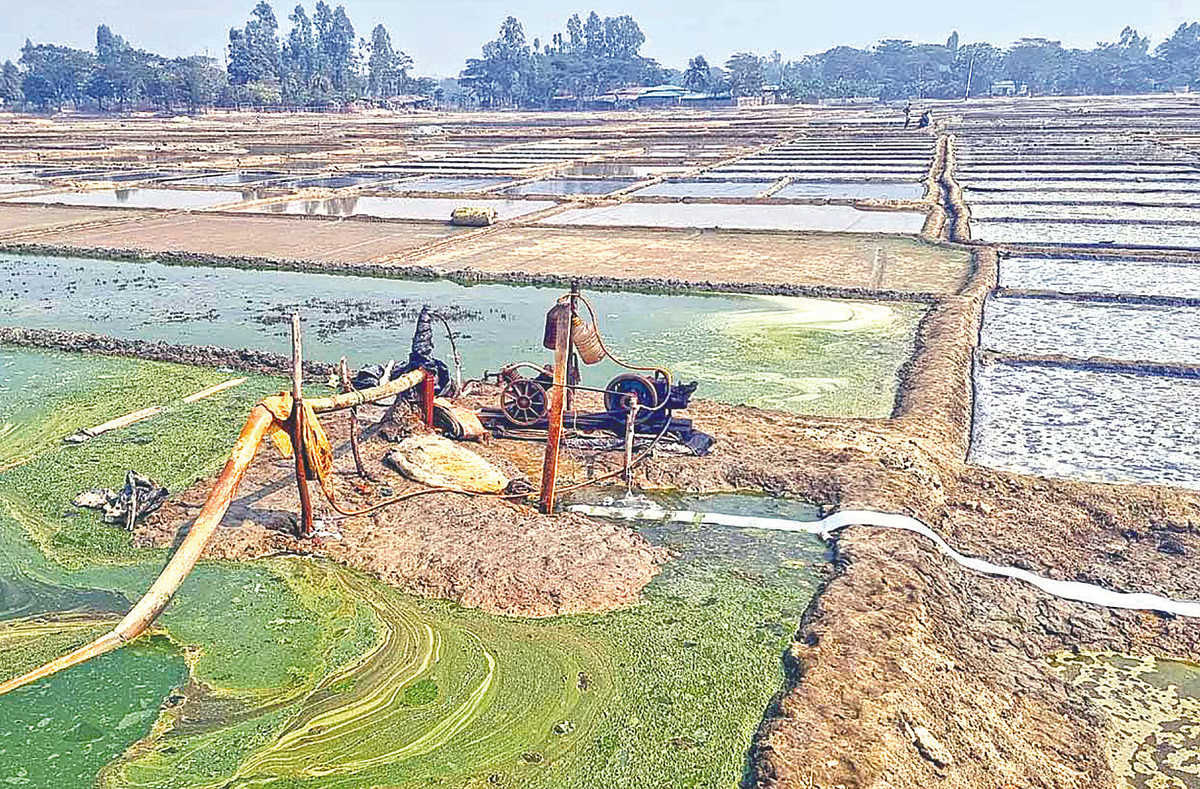
The rapid expansion of illegal salt production in Kutubdia, Bangladesh, using groundwater from over 1,500 unauthorized tube wells, is causing severe environmental and water resource damage. Since 2017, this method has doubled salt yields but has also led to groundwater depletion, rising salinity levels, and destruction of mangrove forests. The extraction of 5 million gallons of water daily is worsening the region’s drinking water crisis, with over 12,000 wells contaminated by salt intrusion. Despite concerns over economic viability, ecosystem degradation, and regulatory gaps, salt production continues unchecked. A government investigation has been launched to assess the long-term environmental impact.
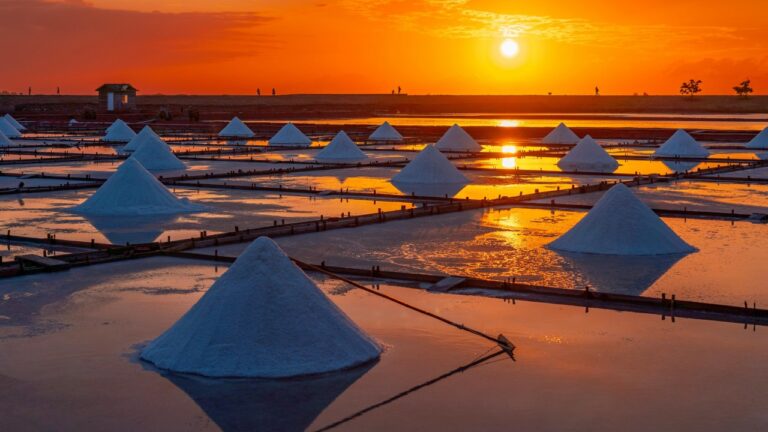
How Could the Color of Light Affect the Traditional Solar Evaporation Process?
Earlier this year, MIT researchers made a surprising discovery of the “photomolecular effect,” a process that “demonstrates for the first time that water can evaporate